Commissioning and fault guides for EV chargers, solar inverters and home batteries.
An installer with a question about a charger, an inverter or a battery often rings the distributor first, and the distributor rings you. Lingo turns your installation manuals into step-by-step guides that your technical team checks and publishes. Installers and distributors follow the same guide on WhatsApp, Teams, web or email.


Lingo
Online


Checking the grid clamps
PublishedQUESTION
How many grid clamps are on this phase?
ANSWERS
- 1.One
- 2.More than one
FIX
1. Keep one grid clamp on this phase. 2. Move the others as your manual shows. 3. Check the arrow points the way your manual shows. 4. Check the reading in the installer menu.
The installer rings the distributor. The distributor rings you.
Chargers, inverters and batteries usually reach site through a wholesaler or a distributor, so that is where an installer’s question goes first. Where it goes next depends on the brand.
The distributor answers for every brand it stocks
One UK wholesaler of solar, storage and EV chargers gives its account holders a technical support engineer for questions before, during and after an installation, across its whole range.
Or sends the installer back to you
One Irish distributor’s support page lists each manufacturer’s own line for product questions, with numbers in six countries, from Ireland to China.
Every manufacturer’s route is different
Of ten manufacturer support pages we read, one line is open around the clock, one closes for lunch, one takes tickets only through a chatbot and one needs a request number before it will take a call.

One installation, several rulebooks.
Commissioning a charger or a hybrid inverter means following your manual alongside the wiring regulations, the network operator’s process and, in Great Britain, the smart charging regulations. A guide sends the part of your manual that applies at each step.
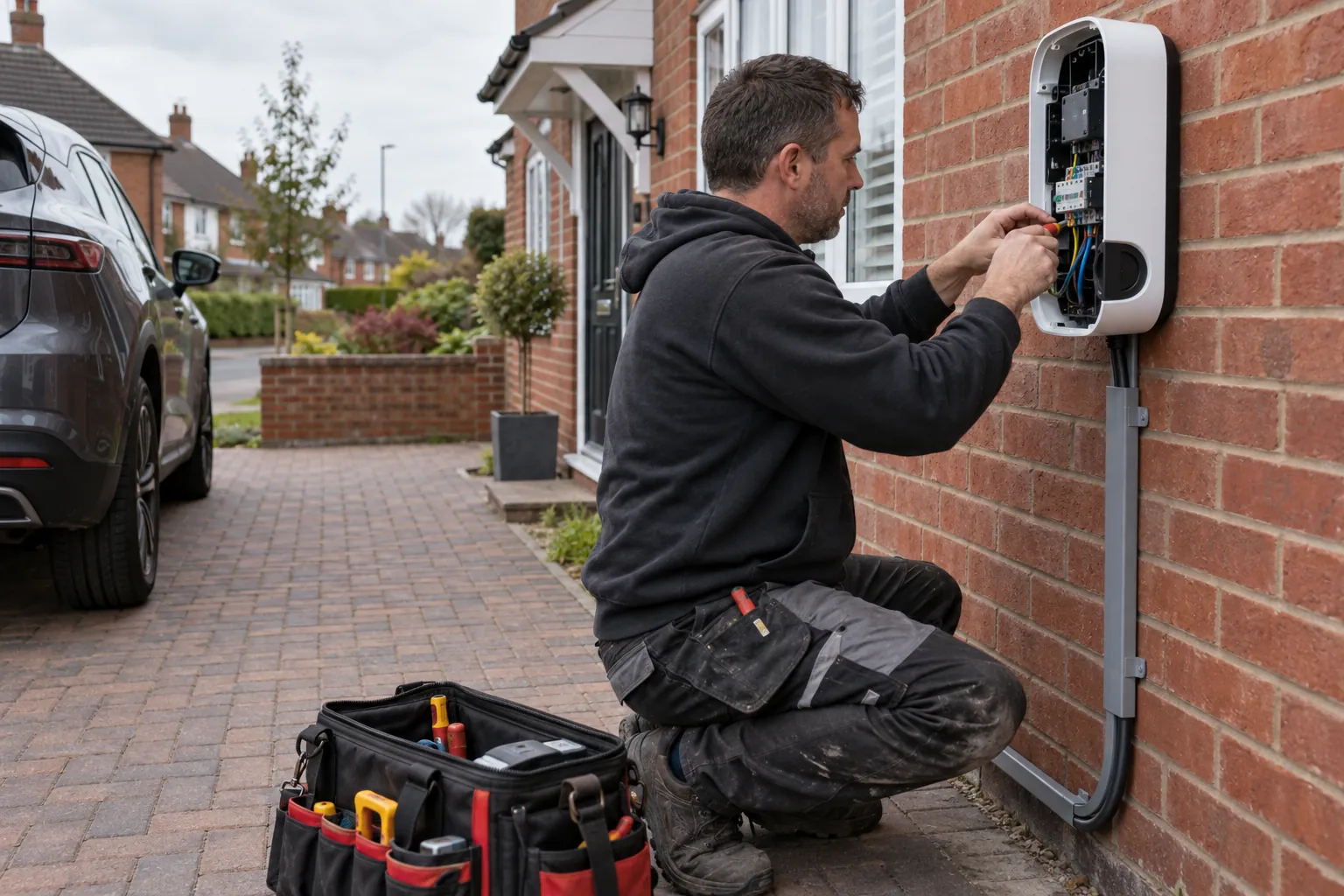
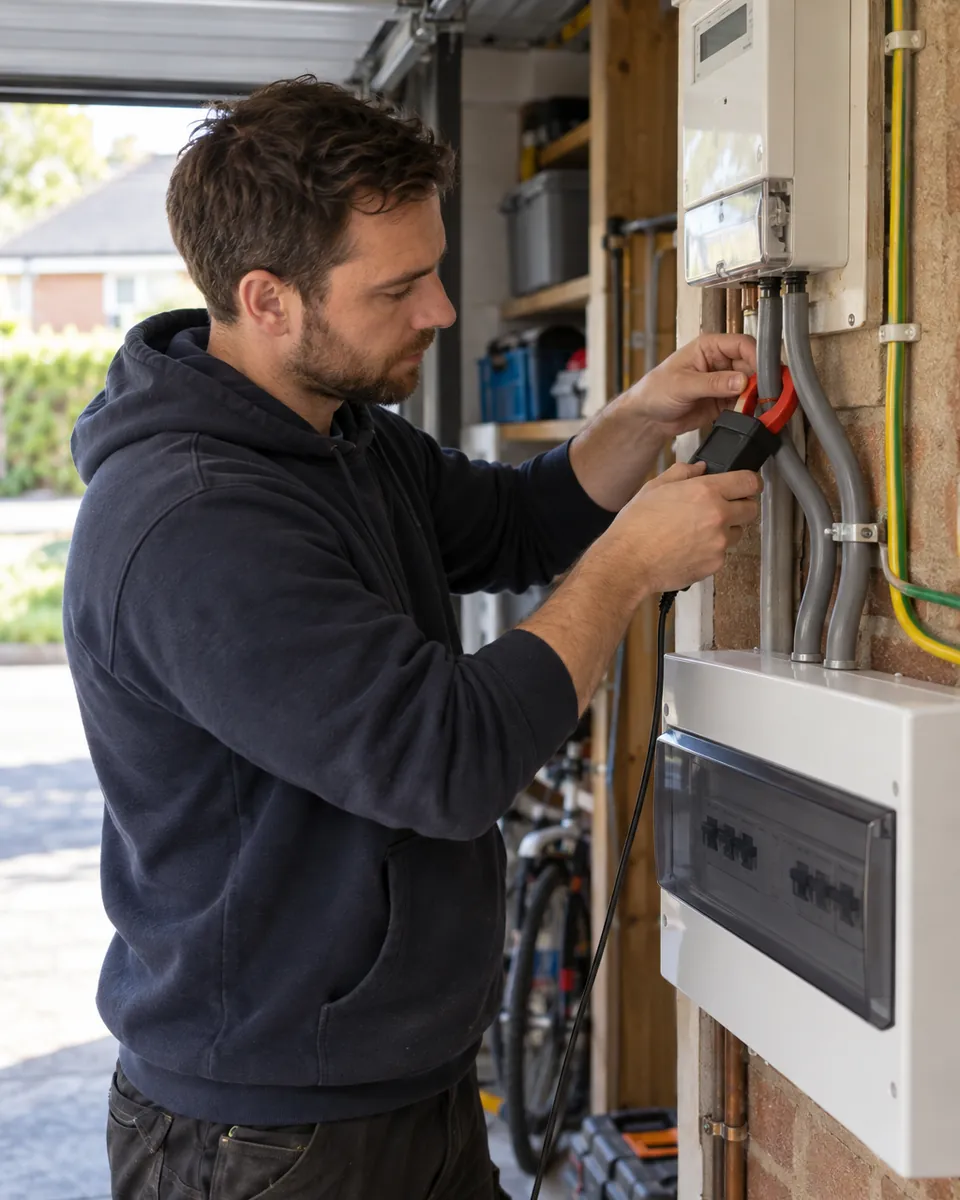
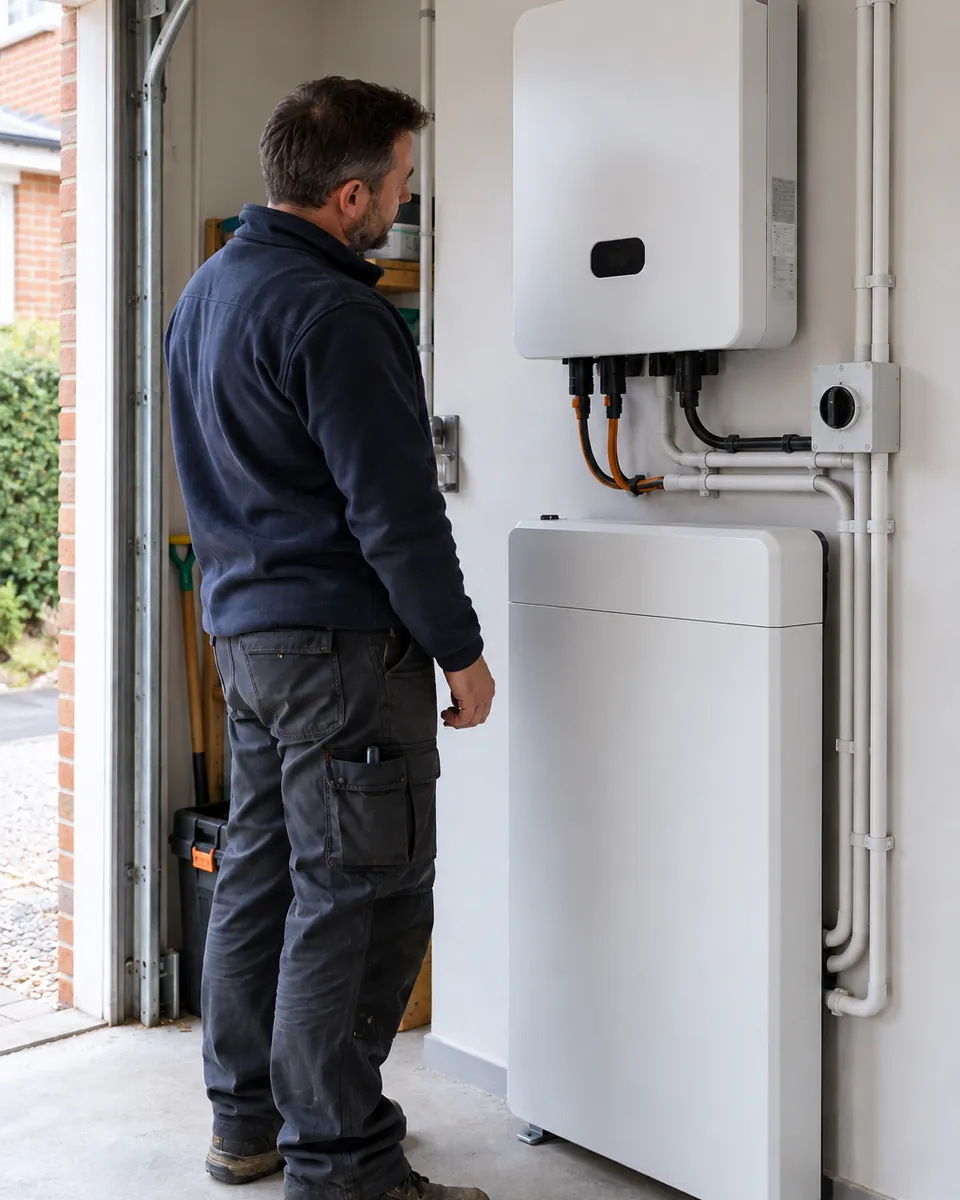
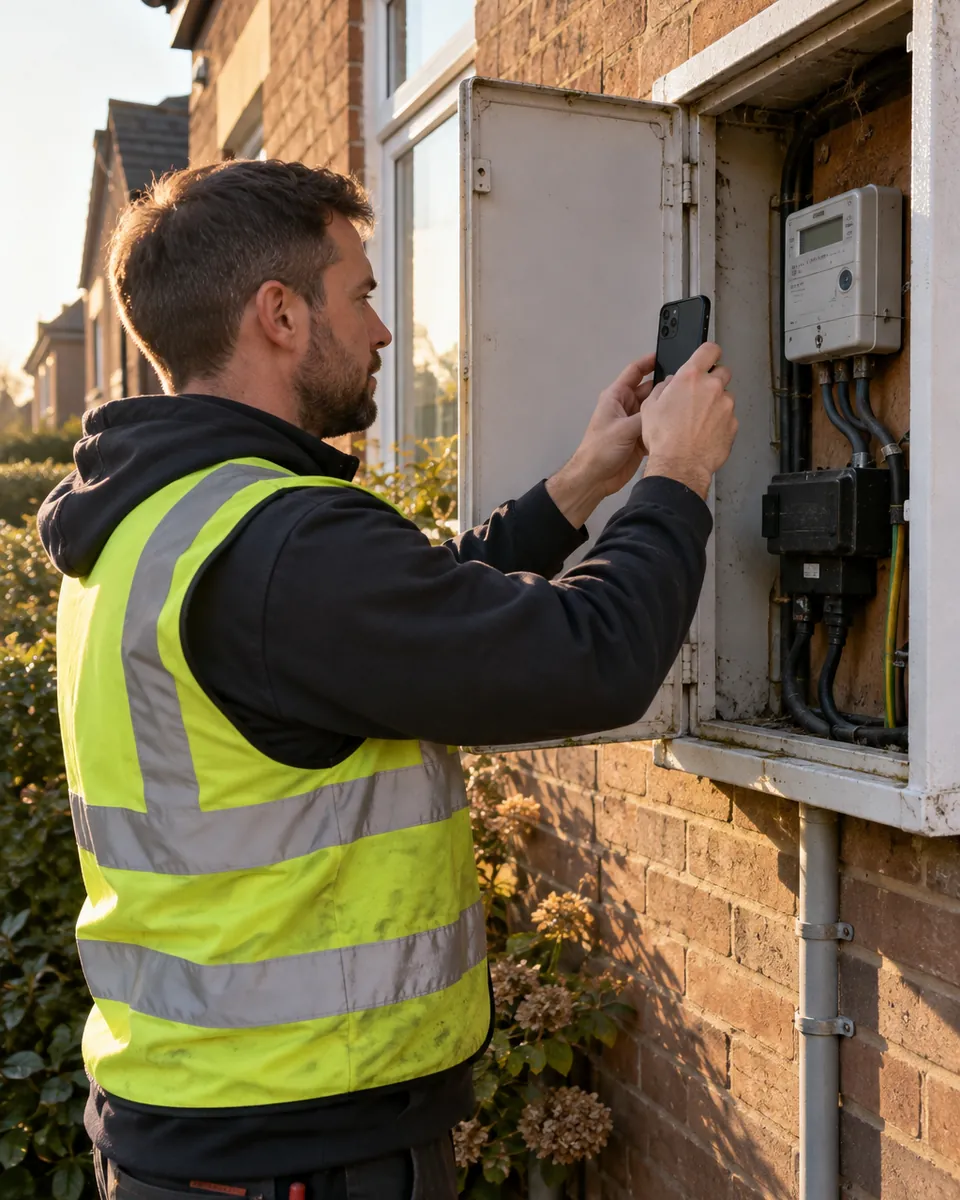
Smart charging, in Great Britain
A charge point sold in Great Britain ships with default charging hours outside the weekday peaks of 8 to 11am and 4 to 10pm, and a random delay of up to ten minutes. The owner can change the hours. The regulations do not cover charge points sold in Northern Ireland.
What a guide answers at the charger, the inverter and the battery.
Audits of grant-funded home charger installations for the government found quality “still extremely variable”, with common faults that were “entirely avoidable”. A guide sends the step your manual gives, at the point the installer reaches it.
Earthing and PEN fault protection
What the charger’s built-in protection does, the checks your manual lists when it trips, and how it is reset.
Supply clamps and load management
Where each clamp goes, which way it faces and how to confirm the reading, for the charger, inverter or battery fitted.
Connection and app setup
Wi-Fi, Ethernet or mobile data, pairing with the app and registering the product, in the order your manual gives.
OCPP and firmware
Connecting to a charge point management platform, and what to check when firmware has not updated.
Smart charging settings
In Great Britain, the default charging hours and random delay a charge point ships with, and how the owner changes them.
Grid code and country setting
The setting your manual gives for Great Britain, Northern Ireland or the Republic of Ireland, and the checks when the inverter reports a grid fault.
Meter and battery communication
The checks your manual lists when an inverter loses contact with its meter or its battery.
Fault indications
What a fault on the display means, including residual current and DC leakage trips, and the checks your manual lists for it.
The same answer on the driveway, at the distributor and in your office.
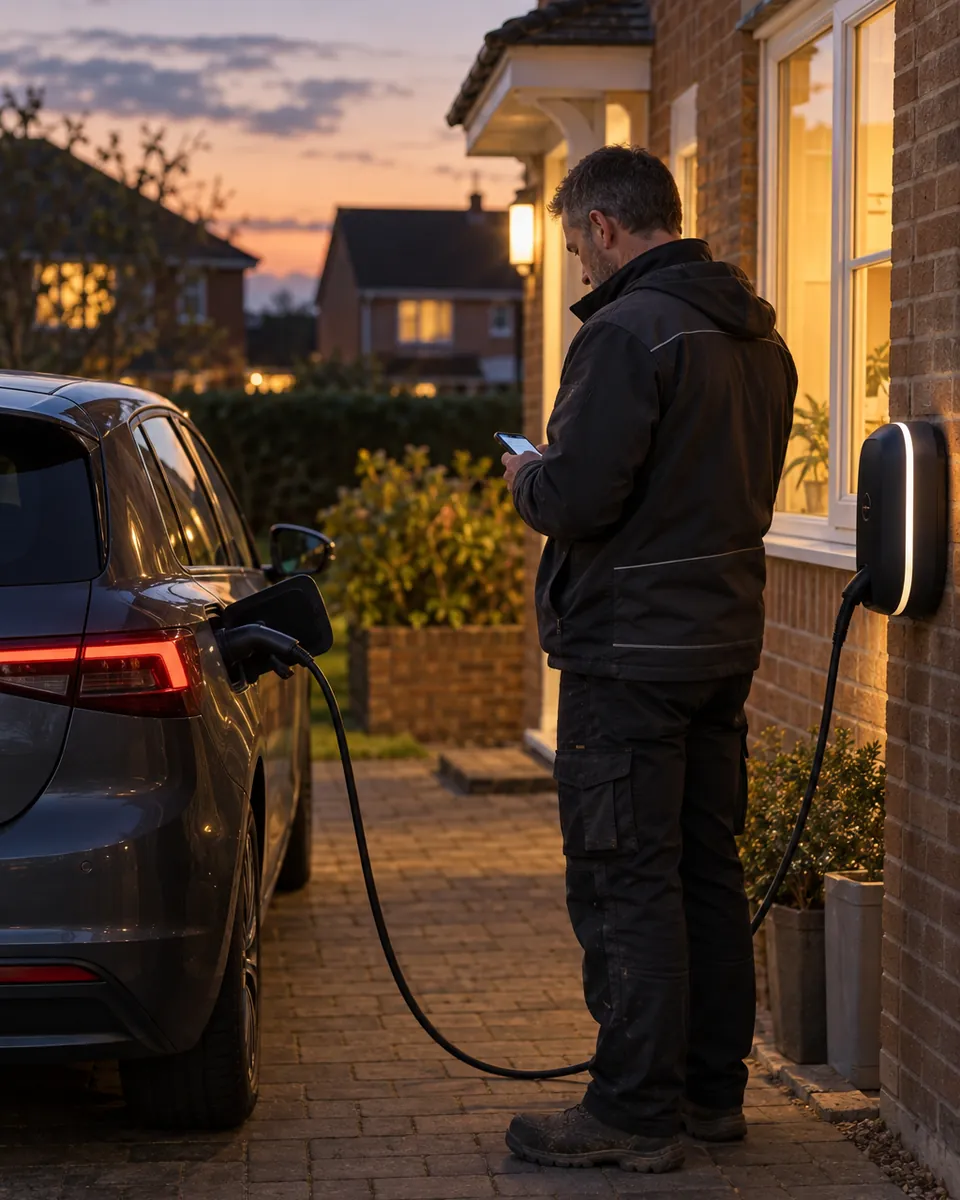 01
01On the driveway
The installer messages your number, says which charger is fitted and gets the steps one at a time, without waiting for a call back.
 02
02At the distributor
Distributor staff you approve follow the same published guides, so the answer an installer gets does not depend on who picks up.
 03
03In your office
A question no guide covers reaches your team by email, and they reply in the same conversation. They can then add the answer to a guide.
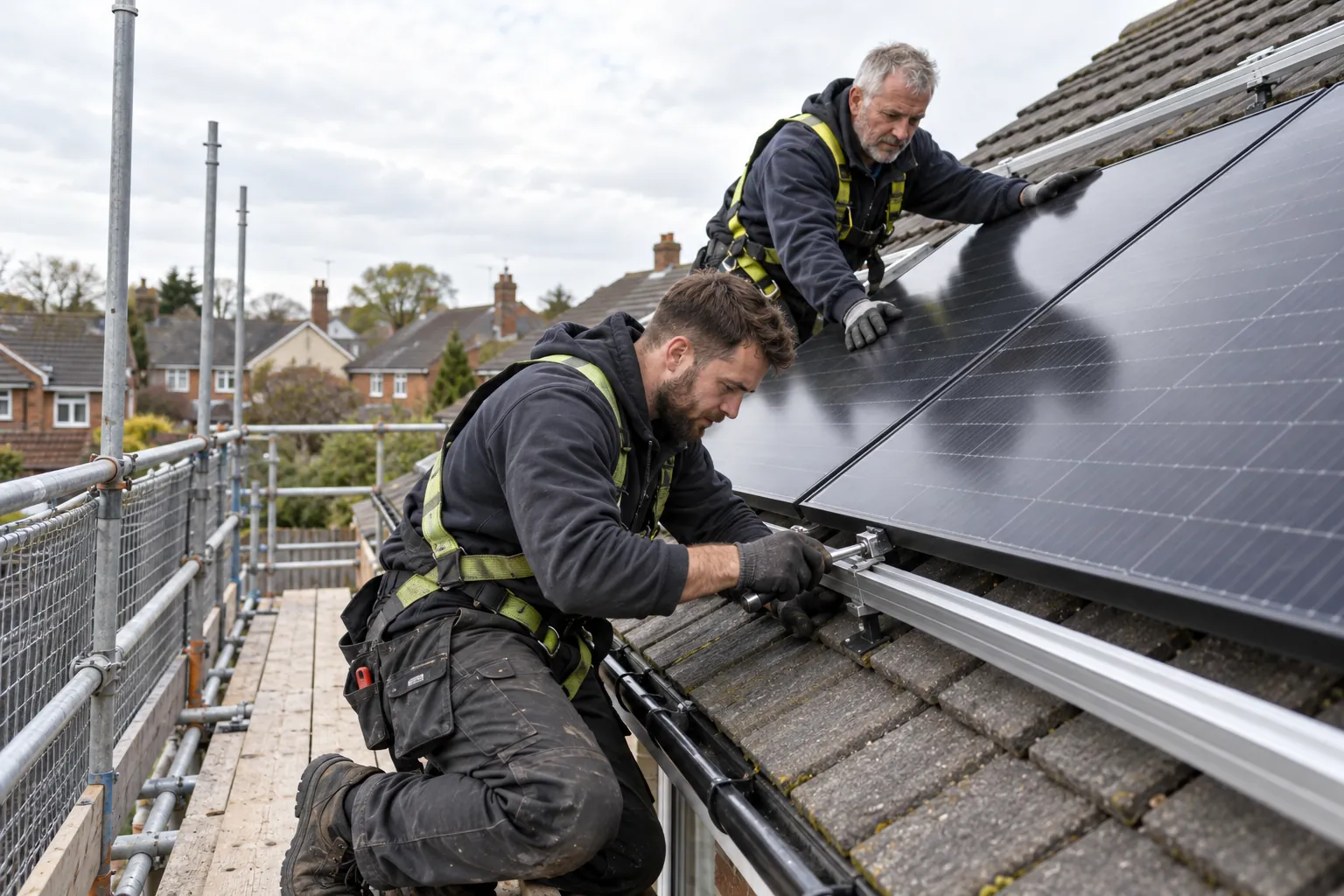
Solar and battery installations are at record levels.
291,000
solar installations in the UK in the 12 months to August 2026, the most in any 12 months since 2012
40,000+
battery storage installations certified by MCS in 2025, almost double the previous record
412,682
home charger installations funded by government grants since 2013. Privately funded chargers are not counted
From your installation manual to the installer’s phone.
- 1
You send the documents for one product
The installation manual, commissioning steps, fault table, app and connectivity guides, and any service bulletins. The three current charger and inverter manuals we read run to 50, 51 and 56 pages.
- 2
Lingo drafts a guide for each task
A guide is a short sequence of questions and fixes. It asks which product and which supply the installer has, and the answer decides the steps that follow.
- 3
Your technical team checks and publishes
They check each draft against the manual, correct it and publish it. When a manual or the firmware changes, they edit the guide or unpublish it.
- 4
Installers and distributors message a WhatsApp number
From a phone number you have approved. Lingo confirms the product, asks the guide’s questions one at a time and sends the steps. They can ask for a person at any point.
Checking the grid clamps
PublishedQUESTION
How many grid clamps are on this phase?
ANSWERS
- 1.One
- 2.More than one
FIX
1. Keep one grid clamp on this phase. 2. Move the others as your manual shows. 3. Check the reading in the installer menu.
What stays with your team.
A guide carries what your documents say. Questions that depend on the design of an installation, the network operator or an inspection go to a person in one step.
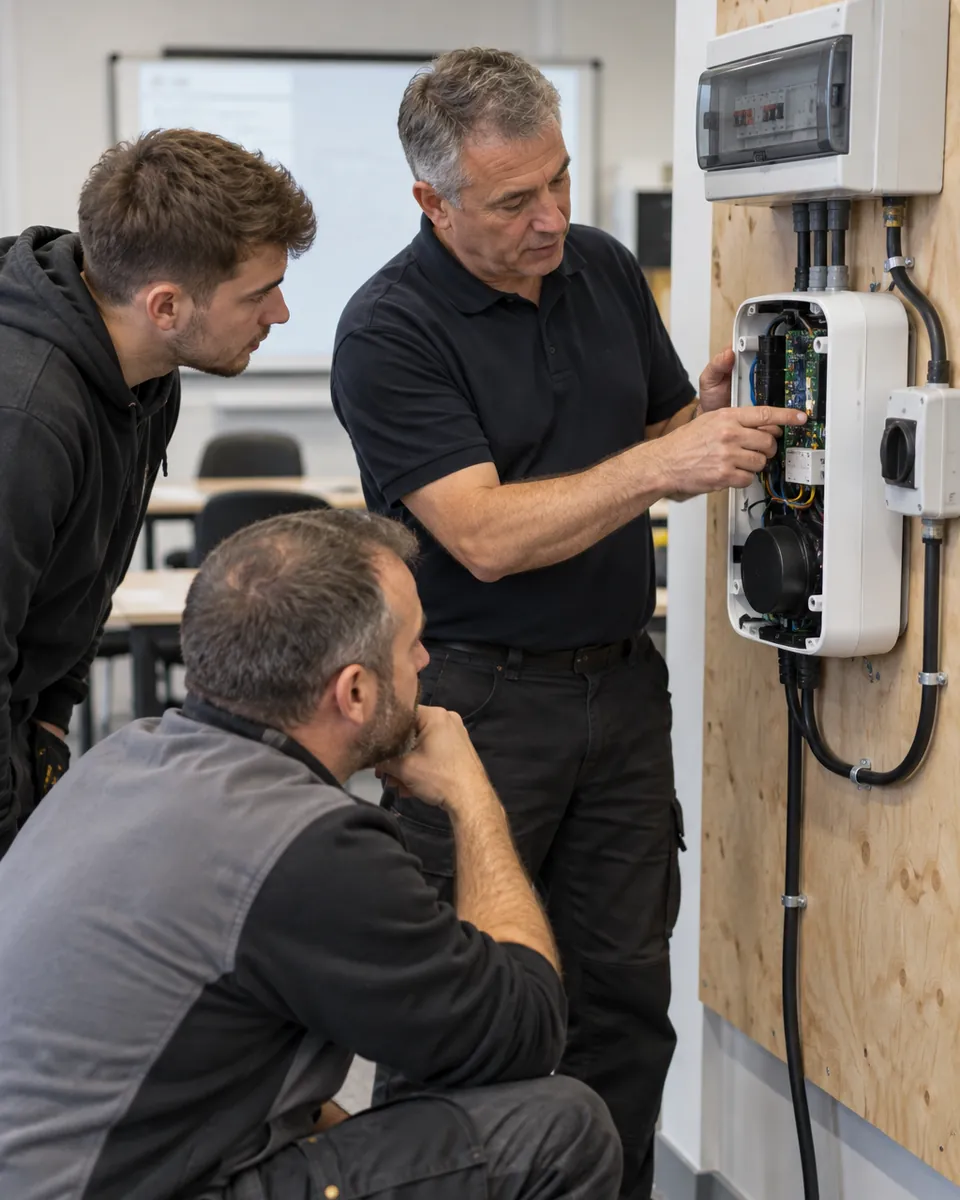
Earthing design
Whether an installation relies on the charger’s own PEN fault protection, an earth electrode or another measure depends on the supply and the site.
Network operator applications
Anything that needs approval before connection, such as a charger that takes the maximum demand above 60A, or storage above 3.68kW under G99.
Export limit settings
Under G100, export limit settings may only be changed with the network operator’s written agreement. A guide can stop there and pass the installer to you.
Backup supply and island mode
They depend on how the installation was designed.
Faults that keep coming back
A contactor fault, or a PEN fault that returns after a reset, needs someone to look at the installation.
Warranty
Claims go to your team or your authorised distributor, as you set out.
Your team decides what an installer is told.
You choose what gets a guide
A procedure you would only talk a trained installer through by phone can be left out, or can end by passing the installer to your team.
You choose who can use it
Access can be limited to the phone numbers you approve: installers, distributor staff and service partners, added one at a time or imported as a list.
You keep a record
Each conversation is kept with the person’s name and number, the product and the guide used, so you can see what each distributor is being asked.
You set the hours for people
Lingo answers at any time. A request for a person reaches your team in the hours you set. Outside them the installer gets your out-of-hours message.
Questions charger, inverter and battery manufacturers ask
Our installers already have an app and a portal. What does Lingo add?
The documented steps from your manuals, in order, on WhatsApp, Teams, web or email, for the product and supply in front of the installer, at any hour. Every conversation is kept, and a person from your team is one message away. Lingo works from what the installer tells it, on any phone, so it runs alongside your app and your monitoring portal.
Can our distributors use it?
Yes. Approve the phone numbers of a distributor’s technical staff and they follow the same published guides as your own team. A question no guide covers comes to your team, so you see what each distributor is being asked.
Do guides cover Great Britain, Northern Ireland and the Republic of Ireland?
Where your documents do. A guide can ask where the installation is before it sends a step, so the installer gets the setting your manual gives for that grid. Applications to the network operator stay with the installer and your team.
Can it cover older chargers and inverters?
Yes, where the documents exist. Each product has its own guides, and the installer is asked which product and version they have.
Can we keep homeowners out?
Yes. Access can be limited to phone numbers you approve, added one at a time or imported as a list.
How much work is it for our team?
Checking drafts against the manual is the main work. Your team corrects and publishes each guide, and chooses which tasks to start with.
How is it priced?
By the number of products you support, from £500 a month for five products. There is no setup fee, and no limit on installers, distributors or conversations.
Related use cases
Use case
Commissioning and setup
Your commissioning procedure as ordered questions and steps.
More on commissioning and setupUse case
Wiring and connections
The documented connection steps for the accessory and variant fitted.
More on wiring and connectionsUse case
Fault codes
The manual’s checks for a fault indication, then a handover to your team.
More on fault codes
Further reading
Article
How Lingo turns a manual into a guide
Read the articlePricing
Priced by the number of products you support
See pricing
Sources, read 16 October 2026: installation manuals from two charger makers and one inverter and battery maker; one inverter maker’s country code overview (April 2025); the support pages of ten manufacturers and three distributors; IET, Code of Practice for Electric Vehicle Charging Equipment Installation, 5th edition (2023); The Electric Vehicles (Smart Charge Points) Regulations 2021; MCS, Notifying DNOs; NIE Networks, EVs and heat pumps; National Grid, Customer Export Limitation Schemes; Cenex, Domestic Chargepoint Audit for OZEV; DESNZ, Solar photovoltaics deployment in the UK, August 2026; MCS, The 2025 Low Carbon Landscape; DfT, Grant schemes for electric vehicle charging infrastructure statistics, 1 July 2026.
Send us one installation manual.
We’ll convert it and show you your own guide in a 15-minute walkthrough.